
SwissUK™ Dual Qualification

Master of Sciences in Immersive Software Engineering Dual Qualification

The Master of Sciences in Immersive Software Engineering Dual Qualification programme is designed for learners aiming to develop advanced expertise in the design, development, and deployment of interactive software solutions in the context of digital transformation and technological innovation. The programme focuses on modern software engineering practices, immersive and interactive technologies (XR/AR/VR), human–computer interaction systems, digital platforms and software architecture, while also developing capabilities in systems analysis, user experience design, interactive system management, software security, and the application of AI and data across high-technology and digital business domains.


The SwissUK Master of Sciences in Immersive Software Engineering integrates the National Competency Framework for Artificial Intelligence (AI) Data Specialist (average salary £49,873/year). The programme combines the excellence of Swiss private education with the UK RQF system recognised by Ofqual (UK Government), enabling learners to obtain a dual qualification aligned with professional competency standards and recognised by employers in international working environments.

Swiss Made. UK Government Recognised.

Qualifications

Promotion

Delivery

Job Listings

Awarding

Swiss Private Degree & UK Gov-recognised Qualification

The Power of SwissUK™ Qualifications

UK ENIC Band

The Master qualification is aligned with FHEQ/RQF Level 7 and has been assessed by UK ENIC as comparable to Band 12 within the UK qualification framework.

Recognised in the United Kingdom

The OTHM Level 7 Diploma is regulated by Ofqual (UK Government) and recognised as equivalent to a UK Master’s Degree level.

Recognised in Switzerland

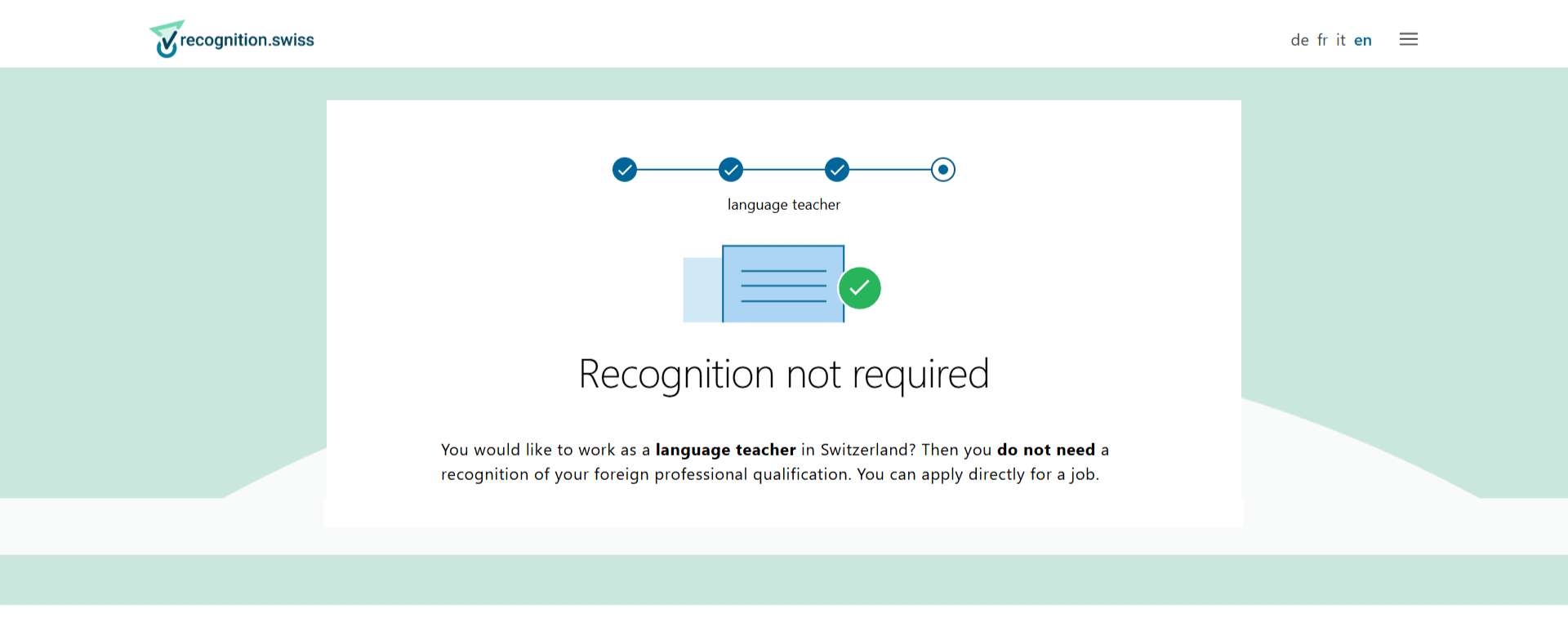
Master’s graduates from SwissUK™ can work in Switzerland immediately, as teaching roles in private educational institutions are considered non-regulated occupations.

National Occupational Standards

Master of Sciences in Immersive Software Engineering Dual Qualification aligned with the Artificial Intelligence (AI) Data Specialist framework — leading to AI Data Specialist status with a UK median salary of £49,873 per year.
Recognised internationally

Recognised under UK FHEQ/RQF Level 7, the Master of Sciences in Immersive Software Engineering Dual Qualification is accepted as equivalent to a Master’s Degree in over 180 countries and territories.

Quickly Learn a New Major

With its unique structure combining a UK-recognised qualification and Swiss private higher-education excellence, learners can switch majors quickly without starting over.

The Master of Sciences in Immersive Software Engineering Dual Qualification programme includes 6 compulsory modules + 1 Capstone Project in Immersive Software Engineering major.
 

A. Compulsory Modules

  1. Security Engineering (20 UK Credits)
  2. Software Programming Principles and Practices in Java I (20 UK Credits)
  3. Agile Project Management (20 UK Credits)
  4. Cloud Computing & DevOps (20 UK Credits)
  5. Database & SQL Programming (20 UK Credits)
  6. Web Designing (20 UK Credits)


B. Capstone Project in Immersive Software Engineering (60 UK Credits)

The Capstone Project serves as an integrated assessment of all knowledge and competencies gained throughout the programme. Students are required to:

  • Analyse the landscape of interactive software technologies, including human–computer interaction (HCI), XR/AR/VR, multimodal systems, digital interaction platforms, and global software technology trends.
  • Evaluate system requirements and interactive software solutions based on technical data, user behaviour and experience, system performance, security, scalability, and real-world feasibility.
  • Design, develop, and validate interactive software solutions at Master’s level, including system architecture, UX/UI design, AI integration, data utilisation, interactive algorithms, and supporting technologies.
  • Identify and manage technology-related risks, including technical risks, information security, user data protection, system scalability, compliance with technical standards, and ethical principles in interactive technologies.
  • Assess the academic and practical impact of interactive software solutions on organisations, enterprises, or end users, including operational effectiveness, innovation capability, user experience, and competitive advantage in digital environments.

Upon graduation, students will receive:

  • Level 7 Diploma in Immersive Software Engineering from OTHM (UK government-recognized, equivalent to a Master’s degree in the UK ENIC/NARIC Band 12).
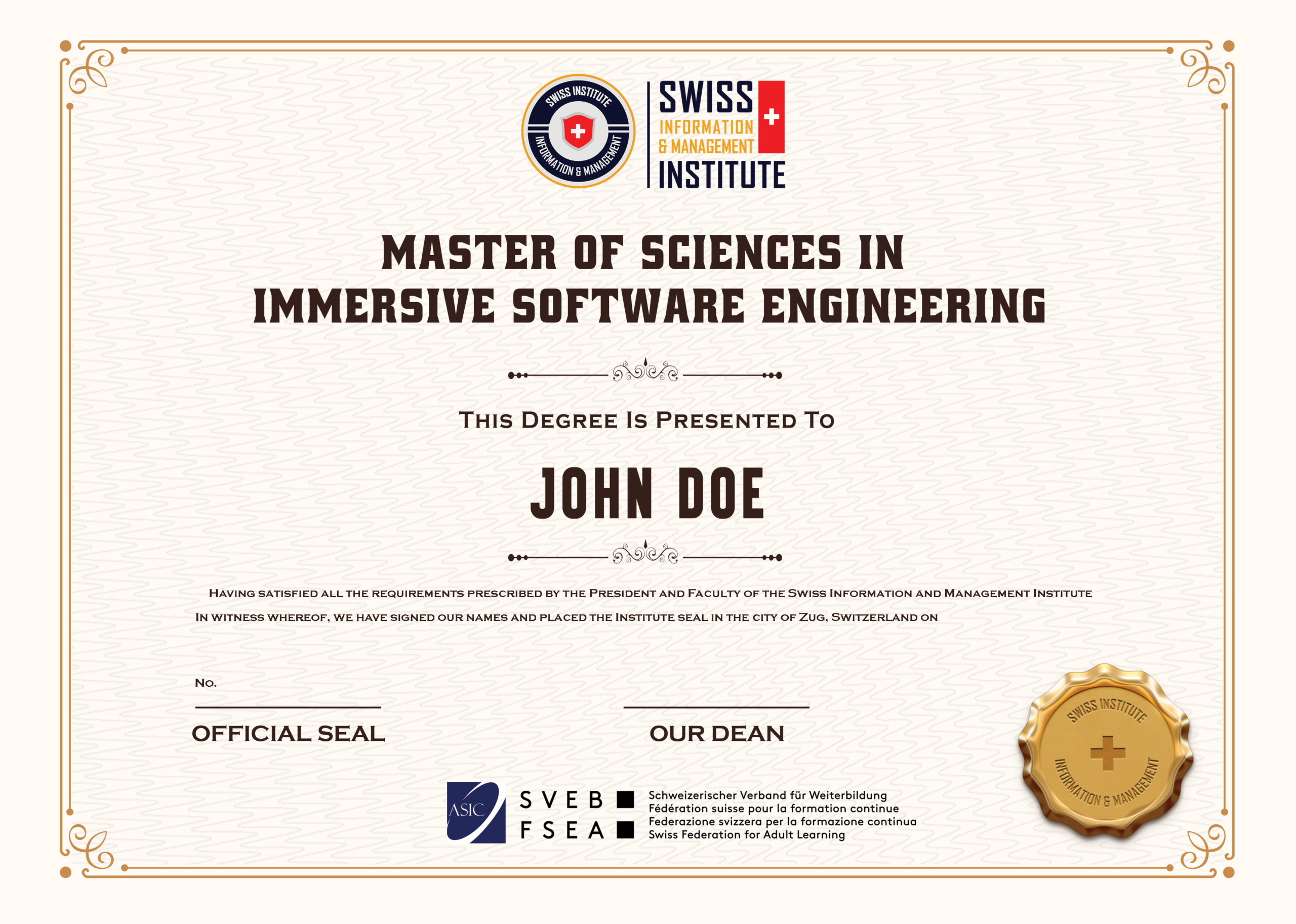
  • Master of Sciences in Immersive Software Engineering from SIMI Swiss.
  • A Bachelor’s qualification in Majors from accredited universities; or a Level 6 EQF diploma or an equivalent qualification from organizations that are authorized to issue qualifications and have been accredited.
  • English proficiency must be at least CEFR (Common European Framework of Reference) level B2 or IELTS 5.5

The programme is delivered through a real-time online Live Class model, where learners study and interact directly with SIMI Swiss lecturers via a live training platform.

It follows the SIMI Swiss Direct™ model — meaning learners study directly with SIMI Swiss, without any partnerships, franchising, or intermediaries. This ensures full access to the original programme content, without modification, while eliminating third-party risks and issues related to unauthorised local training.

  • Strong dual recognition: Swiss Private Degree + UK RQF National Qualification + UK FHEQ National Qualification.
  • Enhanced employability in Switzerland and the UK within the field of Immersive Software Engineering.
  • Eligible for the UK Skilled Worker Visa, based on the RQF Level 7 qualification officially recognised by the UK Government.
  • International recognition through compatibility between FHEQ/RQF/EQF frameworks and other national qualification systems(*). See more HERE
  • UK Digital and technology solutions specialist – Software Engineering Specialist Standard: Easily demonstrate professional competence and meet job requirements with an average salary of £50,087 per year. See more HERE
  • Expanded opportunities for further study at the next academic level internationally(*).
(*) All qualification recognitions, top-ups, or transfers under the Swiss and UK education systems are subject to the specific policies of the receiving institution or relevant authority — verification should be conducted in advance where applicable.

About the Swiss Information and Management Institute (SIMI Swiss)

SIMI Swiss is a SwissUK™ Higher Education Institute that unites the excellence of Swiss Private Higher Education with the nationally recognised qualification framework of the United Kingdom Government, regulated by Ofqual (UK.Gov). SIMI Swiss holds full international accreditation and awards dual qualifications, combining a Swiss Private Degree with a nationally recognised qualification from the United Kingdom, upholding globally recognised academic standards.


References:

  • Sample degree for the Master of Sciences in Immersive Software Engineering from SIMI Swiss HERE.

  • Refer to the verification guidance video for SIMI Swiss accreditation and recognition HERE.
  • Refer to the comprehensive accreditation system of SIMI Swiss HERE.

About the awarding body – OTHM, an Ofqual-regulated UK Government Awarding Organisation

  • Institutional recognition: OTHM is regulated by the Office of Qualifications and Examinations Regulation (Ofqual), the official education regulator of the UK Government. Ofqual recognition number: RN5284. View the official recognition information HERE.
  • Programme recognition: The OTHM Level 7 Diploma in Immersive Software Engineering is Ofqual-regulated under qualification code 610/3058/2. View the official recognition information HERE.


References:

  • How to verify OTHM regulation and recognition: HERE

The SwissUK™ Master of Sciences in Immersive Software Engineering Dual Qualification programme from SIMI Swiss integrates the UK Government-regulated national competency framework for the Digital and technology solutions specialist – Software Engineering Specialist role (see more HERE). This integration not only enables learners to obtain a UK Government-recognised Level 7 national qualification but also offers the following advantages:

  • Learn the competencies employers need: Beyond theory, students develop full KSBs (Knowledge, Skills and Behaviours) aligned with the UK Government occupational standard.
  • Easier competency verification for employment: Each Learning Outcome (LO) is mapped to professional criteria, enabling employers to assess and trust graduates’ abilities from the recruitment stage.
  • Enhance early opportunities to become an AI specialist: Competencies are standardised in line with postgraduate-level professional standards, preparing learners for leadership and supervisory roles in technology and data-driven environments.
  • Globally competitive earnings: Digital and technology solutions specialist – Software Engineering Specialist roles have an average salary of £50,087 per year in the United Kingdom.
  • Internationally recognised employability profile: Competency standards are applied in multinational organisations, supporting global career mobility.
  • Reduced unemployment and career-misalignment risks: Learners can enter employment early through the staged recognition and awarding of national qualifications.
  • A strong advantage over traditional Master programmes: While many graduates struggle to define their professional capabilities, SwissUK™ students graduate with a clear, internationally validated competency profile — and can fully evidence it.
Key advantage over traditional Master’s programmes: While many graduates struggle to find direction after completing their studies, SwissUK™ students graduate with clearly defined professional competencies and the ability to demonstrate them confidently to employers.

The programme awards two qualifications:

  • Level 7 Diploma in Immersive Software Engineering – awarded by OTHM (United Kingdom)
  • Master of Sciences in Immersive Software Engineering – awarded by SIMI Swiss (Switzerland)

These two qualifications are fully integrated, creating maximum strength and value for graduates upon completion.

Yes.

  • The OTHM qualification is regulated by Ofqual (UK Government), ensuring national standards of quality, transparency, and compliance in the United Kingdom.
  • SIMI Swiss is an international higher education institute operating under the Swiss Private HEI model, registered and governed in the Canton of Zug. It is responsible for the academic value of its Private Degree programmes in accordance with Swiss law.

Yes.

  • The OTHM qualification is part of the RQF and regulated by Ofqual, and it is recognised at the Master’s Degree Level within the UK education system.

References:

  • Official UK Government recognition assessment: HERE
  • Recognition of equivalency to a Master’s degree in the UK and across Europe: HERE

The UK Qualification Reference Statement issued by an authorised representative of the UK Department for Education is the highest-level document confirming the status of a graduate’s qualification, serving to authenticate and recognise:

  • Verification that the qualification is recognised in the United Kingdom.
  • Recognition of the qualification’s level and position within the UK national qualification frameworks, including all three frameworks:
    • The Regulated Qualifications Framework of England, Wales, and Northern Ireland (RQF)
    • The Scottish Credit and Qualifications Framework (SCQF)
    • The Credit and Qualifications Framework for Wales (CQFW)

Example: A qualification recognised by the UK Department for Education with the notation UK Framework Levels – RQF Level 7 / SCQF Level 11 / CQFW Level 7 means that the qualification is classified at the MASTER’S level across the entire United Kingdom and holds academic validity in England, Scotland, Wales, and Northern Ireland.

  • Confirmation that the awarding institution is recognised by the UK Government.
  • Confirmation of the entry requirements for obtaining the qualification.
  • Confirmation of the assessment and examination procedures.
  • Confirmation of the graduate’s competency and employability.
  • Confirmation of progression opportunities for further study within the UK National Education System after completing the qualification.

Yes.

Within the Swiss employment system, language instructors and teachers working in private educational institutions fall under professions that may be hired based on internationally recognized private qualifications.
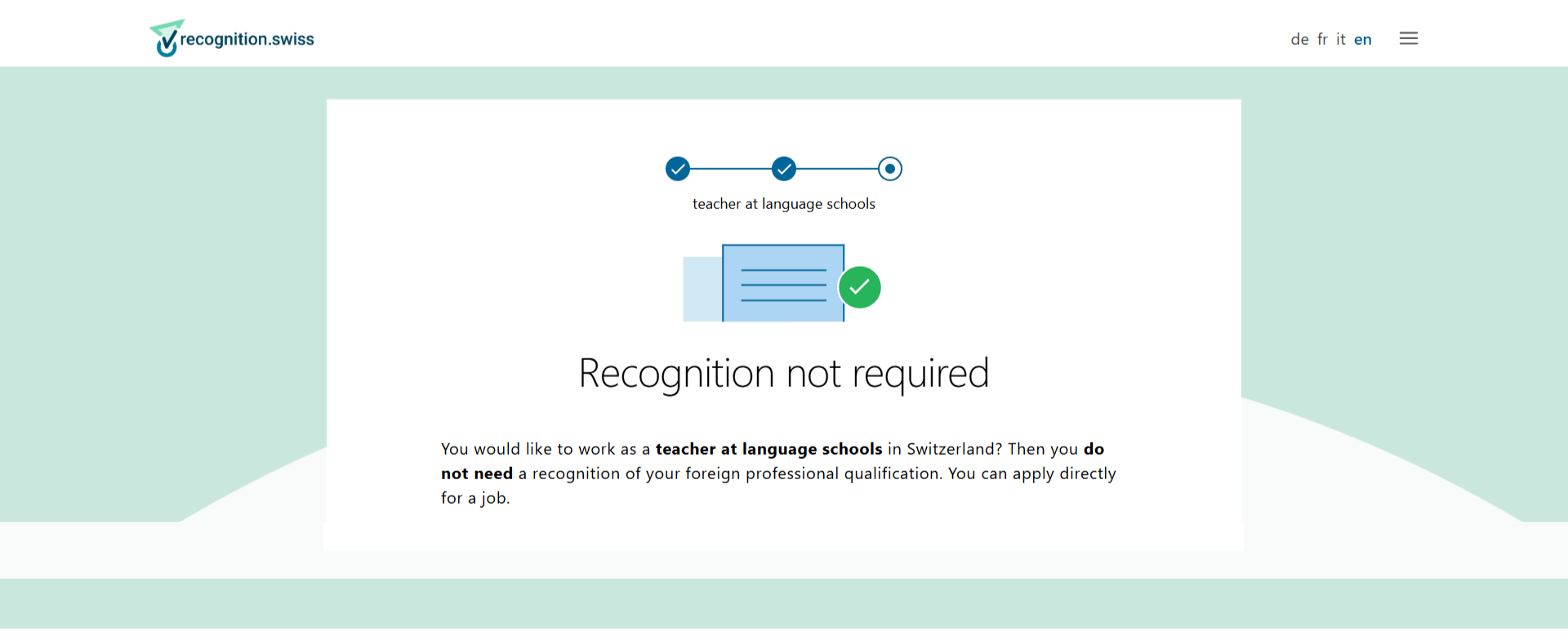
The Governments of Switzerland and the United Kingdom have signed a Mutual Recognition Agreement on Professional Qualifications, effective from 01/01/2025. Under this agreement, professional qualifications issued in either country may be submitted for recognition when applying for a professional licence in the other country, including professions that fall under the professionally regulated category—those requiring a licence to practise.

As a result, qualifications within the SwissUK™ education system—particularly programmes awarded by Ofqual Awarding Bodies—are eligible to be submitted as part of the initial application for recognition or for obtaining a new professional licence in Switzerland, in accordance with the mechanisms defined in the agreement.

References:

  • Swiss–UK Mutual Recognition Agreement on Professional Qualifications from the UK Government: HERE
  • Swiss–UK Mutual Recognition Agreement on Professional Qualifications from the Swiss Government: HERE
  • List of approximately 200 regulated professions requiring a professional licence under the Swiss–UK Mutual Recognition Agreement (qualifications within the SwissUK™ system—including those from Ofqual Awarding Bodies—are eligible for initial assessment according to the agreement): HERE

UK ENIC benchmarks RQF Level 7 at Band 12, which is equivalent to a Master’s Level. See more details HERE

Yes.

According to the European Qualifications Framework (EQF), RQF Level 7 is aligned with EQF Level 7. See more details HERE

Yes. It may be evaluated as equivalent to a Master’s degree or Master-level, depending on the individual application, through:

  • CICIC (Canada)
  • WES (USA/Canada)

The final outcome depends on the purpose of the evaluation and the independent assessment conducted by these agencies. See more details HERE

Yes.

The qualification integrates the competency standards for the Digital and technology solutions specialist – Software Engineering Specialist – Occupational Code OCC0482J under the UK occupational framework. See more details HERE

According to labor market data from the United Kingdom, the average annual salary for the Digital group (which includes manager roles aligned with this programme) is £50,087 per year. See more details HERE

Yes.

According to the Statement of Changes to the UK Immigration Rules (effective 2025), the minimum qualification level for the Skilled Worker Visa has been raised to RQF Level 6.

A qualification at RQF Level 7 exceeds the mandatory academic requirement.

  • See more details HERE

Yes. Learners are eligible to apply for postgraduate programs such as:

  • Doctor of Philosophy (PhD) in Software Engineering, Computer Science, Information Technology, Artificial Intelligence, XR/AR/VR, Human–Computer Interaction, or related disciplines;
  • Doctor of Engineering (EngD) or other applied doctoral programmes in software engineering, digital technologies, interactive systems, and immersive technologies;
  • Doctor of Business Administration (DBA) with a focus on Technology Management, Digital Transformation, Innovation Management, or Technology Strategy.

Reference: Recognition of RQF/EQF Level 7 as a Master’s degree under international education standards. See more details: HERE

All qualification recognitions, top-ups, or transfers under the Swiss and UK education systems are subject to the specific policies of the receiving institution or relevant authority — verification should be conducted in advance where applicable.

Yes.

  • SIMI Swiss provides consular legalization services for its qualifications. See more HERE.
  • OTHM offers an online qualification verification system via QR Code. See more HERE.
  • The UK Department for Education confirms that OTHM qualifications (including those bearing the SIMI name) are officially recognised by the UK Government and mapped to RQF Level 7 / SCQF Level 11 / CQFW Level 7 (PGD/Master Level).
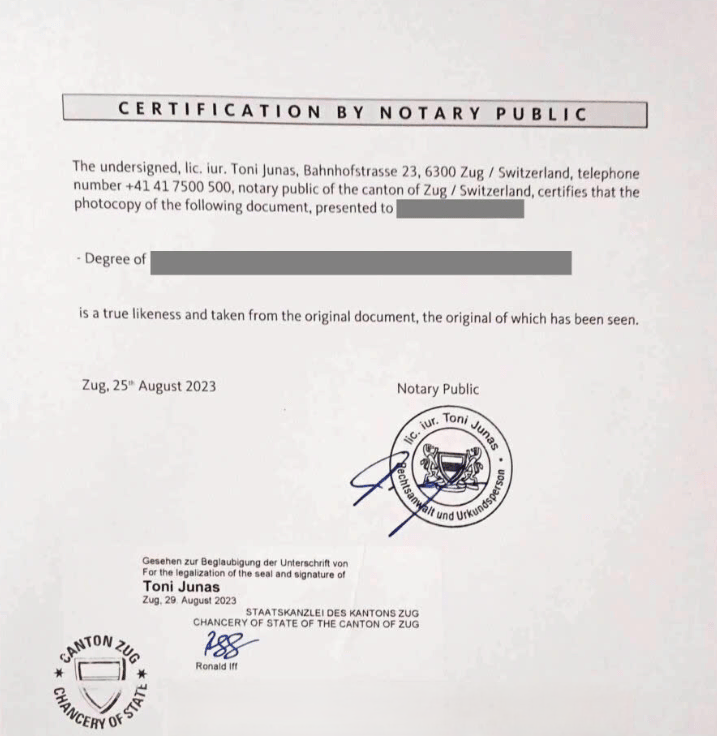
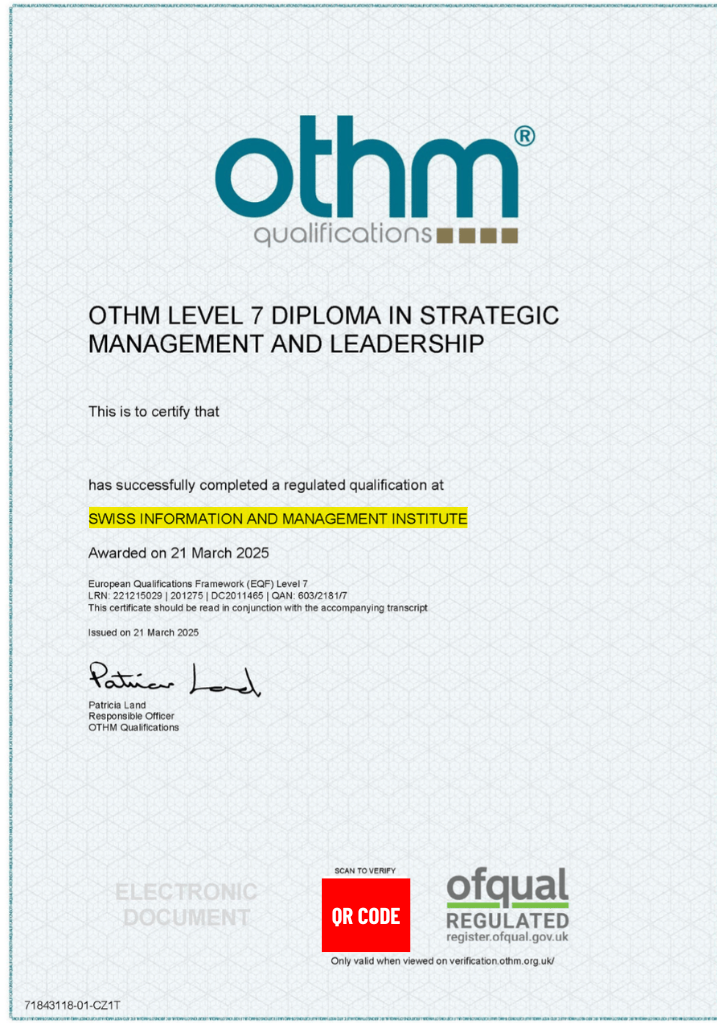
Information relating to the programme, the qualification, its accreditation status, and any associated recognition frameworks is derived from official publications issued by the UK Government, statutory regulatory authorities, and other competent bodies. All information is accurate as of the date of publication; however, it may be amended, revised, or withdrawn at any time without prior notice, pursuant to updates in applicable policies, regulations, or statutory instruments.

Although recognition, cross-recognition, and equivalency frameworks are established on transparent, objective, and verifiable criteria, each country, ministry, governmental department, professional body, or receiving institution retains sole discretion and full adjudicatory authority to determine whether a qualification is recognised, accepted, or deemed equivalent under its internal regulations and legal jurisdiction. Accordingly, learners bear full responsibility for verifying recognition requirements directly with the relevant authority or institution before relying on the qualification for any legal, academic, or professional purpose.

In accordance with principles of transparency and jurisdictional compliance, SIMI Swiss, UKeU®, OTHM, and all related parties do not make any commitment or representation regarding qualification recognition, equivalency, immigration status, or professional licensing in any country, ministry, department, or regulatory body.

This information is provided to ensure accuracy and transparency in public communication, consistent with international standards and best practices in academic disclosure.

Book a 1:1 consultation

    Close Search Window